
 Image 1 of 1
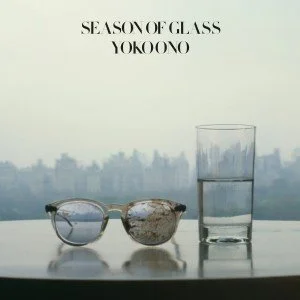
Anniversary of its release, Secretly Canadian release Yoko Ono’s seminal 1981 album 'Season of Glass'. One of Pitchfork’s Top 200 albums of the 1980s, 'Season of Glass' was released in June 1981, just seven months after the senseless murder of Ono’s husband and creative partner, John Lennon. Full of songs about love, loss, anger and fear, the album reflected Ono’s experience in stark detail, creating almost a companion piece to Ono and Lennon’s 1970 Plastic Ono Band “primal scream” albums. “'Season of Glass' was really just being me, I suppose,” Ono told Newsweek in 1982.Ono’s fifth studio album, 'Season of Glass' was also the artist’s most commercially successful to date, cracking the Top 50 on Billboard’s Album Chart, but it was not without controversy. The album’s cover was a photograph of Lennon’s blood-soaked glasses, just as they were returned to Ono from Roosevelt Hospital after his murder. Though David Geffen, the head of Geffen Records, who had released Ono and Lennon’s 'Double Fantasy' in November 1980, and released the original version of 'Season of Glass', implored Ono to change the cover, Ono stood her ground.Backed by the same band that had played on 'Double Fantasy', the sound of 'Season of Glass' sits in alignment next to that album, which at the time was already considered an artistic triumph for Ono, who was inspiring young artists like the B-52s and Sonic Youth.
Anniversary of its release, Secretly Canadian release Yoko Ono’s seminal 1981 album 'Season of Glass'. One of Pitchfork’s Top 200 albums of the 1980s, 'Season of Glass' was released in June 1981, just seven months after the senseless murder of Ono’s husband and creative partner, John Lennon. Full of songs about love, loss, anger and fear, the album reflected Ono’s experience in stark detail, creating almost a companion piece to Ono and Lennon’s 1970 Plastic Ono Band “primal scream” albums. “'Season of Glass' was really just being me, I suppose,” Ono told Newsweek in 1982.Ono’s fifth studio album, 'Season of Glass' was also the artist’s most commercially successful to date, cracking the Top 50 on Billboard’s Album Chart, but it was not without controversy. The album’s cover was a photograph of Lennon’s blood-soaked glasses, just as they were returned to Ono from Roosevelt Hospital after his murder. Though David Geffen, the head of Geffen Records, who had released Ono and Lennon’s 'Double Fantasy' in November 1980, and released the original version of 'Season of Glass', implored Ono to change the cover, Ono stood her ground.Backed by the same band that had played on 'Double Fantasy', the sound of 'Season of Glass' sits in alignment next to that album, which at the time was already considered an artistic triumph for Ono, who was inspiring young artists like the B-52s and Sonic Youth.